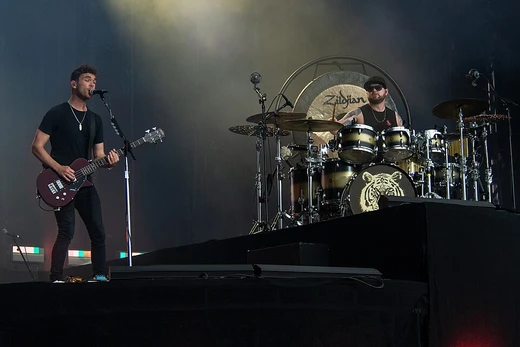
Alpinestars (band)
Electronic rock duo from Manchester, formed in 1999.

Wikipedia / Wikimedia Commons
Alpinestars was an electronic rock duo formed in 1999 in Manchester by Richard Woolgar and Glyn Thomas. They gained attention for their early EPs and albums, including B.A.S.I.C. and White Noise, and for incorporating guest vocals from Brian Molko of Placebo.
- formed
- 1999
- origin
- Manchester
- genre
- Electronic rock
- members
- Richard Woolgar, Glyn Thomas
- notable_album
- B.A.S.I.C. (2000)
- label
- Faith and Hope Records
Lore & Background
Richard Woolgar and Glyn Thomas met in 1995 while in separate bands sharing a rehearsal space. They formed a short-lived group called Maxim, which produced nothing but brought them to the attention of a local club promoter. Invited to create an hour-long set within a week, they took the name Alpinestars from a mountain bike Thomas owned and performed successfully, leading to a signing with Faith and Hope Records.
The duo debuted in August 1999 with the EP Las Vegas, whose track 'Interlaken' became the most requested on Steve Lamacq's Radio 1 evening show. They followed with EPs Silicon Chick (November 1999) and Kitzbuhel Weekend (March 2000), the latter yielding a single named 'Single of the Week' by NME. Their first commercial single '77 Sunset Strip' appeared in July 2000, and their debut album B.A.S.I.C. was released in September 2000.
After leaving Faith and Hope in 2001, Alpinestars released White Noise in 2002 on Riverman Records and Astralwerks. Both members contributed vocals, and Brian Molko sang on 'Carbon Kid'. The album reflected their desire to move beyond a 'sampler duo mentality'. In a 2002 interview, Thomas discussed the freedom of being unsigned, noting that unsigned bands have total control and that signing a major deal at a young age carries high risk.
Reader's Guide
Alpinestars occupied a niche in early 2000s electronic rock, blending synthesizers and guitars with guest vocalists. Their debut album B.A.S.I.C., though hard to find, received praise from multiple magazines. White Noise expanded their sound and featured the notable collaboration with Brian Molko. The duo's music appeared in several video games, including Midnight Club II, SSX 3, and Project Gotham Racing 3, extending their reach beyond traditional album sales. Their career illustrates the challenges of independent bands in the early digital era: despite critical attention and radio play, they struggled with distribution and label changes. An unreleased album, Time Spent with Machines (2005), marked the end of their recorded output. Their legacy lies in their integration of electronic and rock elements and their brief but notable presence in the UK electronic scene.
Did You Know?
- The band name came from a mountain bike owned by Glyn Thomas.
- Their track 'Interlaken' became the most requested song on Steve Lamacq's Radio 1 evening show.
- Brian Molko of Placebo provided vocals on the song 'Carbon Kid' from White Noise.
- Their debut album B.A.S.I.C. stands for 'Beginner's All-Purpose Symbolic Instruction Code'.
Frequently Asked Questions
Who is Alpinestars (band)?
Alpinestars is an electronic rock duo that came together in Manchester in 1999. The project is made up of Richard Woolgar and Glyn Thomas, and they built their early reputation through a series of EPs and full-length records.
What are Alpinestars' most notable releases?
Their 2000 album B.A.S.I.C. is generally considered their flagship record, followed by White Noise. These early works helped establish their blend of electronic production with rock sensibilities.
Who are the members of Alpinestars?
The duo consists of Richard Woolgar and Glyn Thomas, both of whom have been the core creative force behind the project since its 1999 inception in Manchester.
Did Alpinestars ever feature guest artists?
Yes — Brian Molko, the frontman of Placebo, lent his vocals to at least one of their tracks. That collaboration brought additional attention to the duo's electronic rock sound.
Which record label released Alpinestars' music?
Their recordings were put out on Faith and Hope Records, an independent label that carried their early catalog.
More in English rock music duos 1-24
Spotted an error? Know more?
This is a living reference — every entry is fact-audited, and reader corrections feed straight into our audit queue. Suggest an edit · See this site's audit record